 admin
admin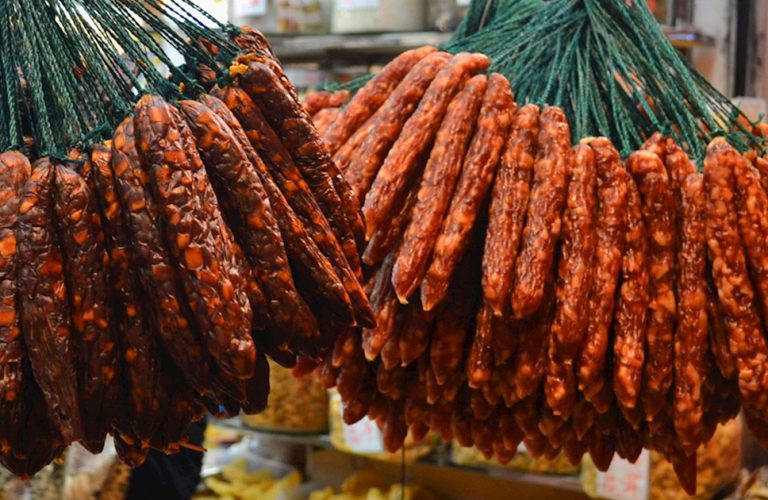
There is a particular smell that belongs to Sichuan winters. It drifts through residential streets and down narrow alleyways, settles in the stairwells of apartment buildings, and announces itself from a distance before you can see its source: the smell of meat drying in cold air, threaded through with the fragrance of chili, pepper, and smoke. Look up, and you will find them — strings of deep red sausages hanging from bamboo poles outside windows, draped across balcony railings, suspended between hooks above doorways. This is lachang (腊肠), Sichuan’s cured sausage, and in the weeks around the lunar new year, it is everywhere.
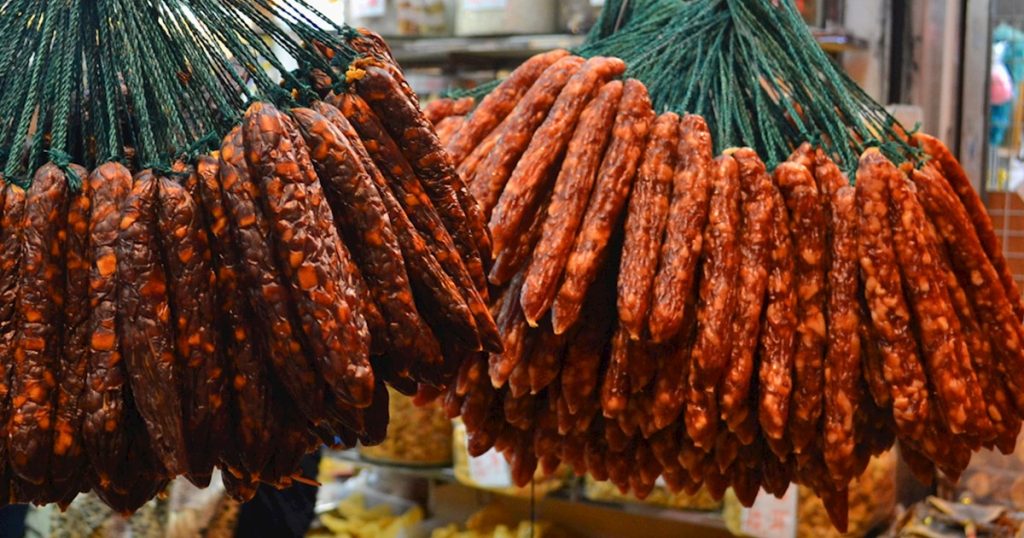
The sight is so common in Sichuan that locals barely register it. For the uninitiated, it is quietly arresting. The sausages — plump, tightly linked, their casings mottled with dark spice and glistening with rendered fat — look almost lacquered, like something between food and craft object. Which, in a sense, they are. A good lachang takes the better part of a month to make properly, and the knowledge required to make one well is the kind accumulated over generations, passed down through households rather than cookbooks. It is winter food in every dimension: made when it’s cold enough to preserve meat safely, eaten when the body craves something warm and substantial, and stored as insurance against leaner months ahead.
To understand Sichuan lachang is to understand something important about how Sichuan people relate to food — not just as sustenance, but as craft, as seasonal rhythm, as the taste of home encoded in fat and spice and time.
What Makes It Sichuan
China has a long tradition of cured and preserved meats, and sausage-making is practiced in various forms across the country. Cantonese lap cheong (腊肠) — sweet, dry, slightly smoky — is probably the version most familiar outside China, a staple of dim sum and Cantonese fried rice. Yunnan has its own preserved pork traditions, as does Hunan. So what distinguishes the Sichuan version?

The answer is, characteristically, the peppercorn.
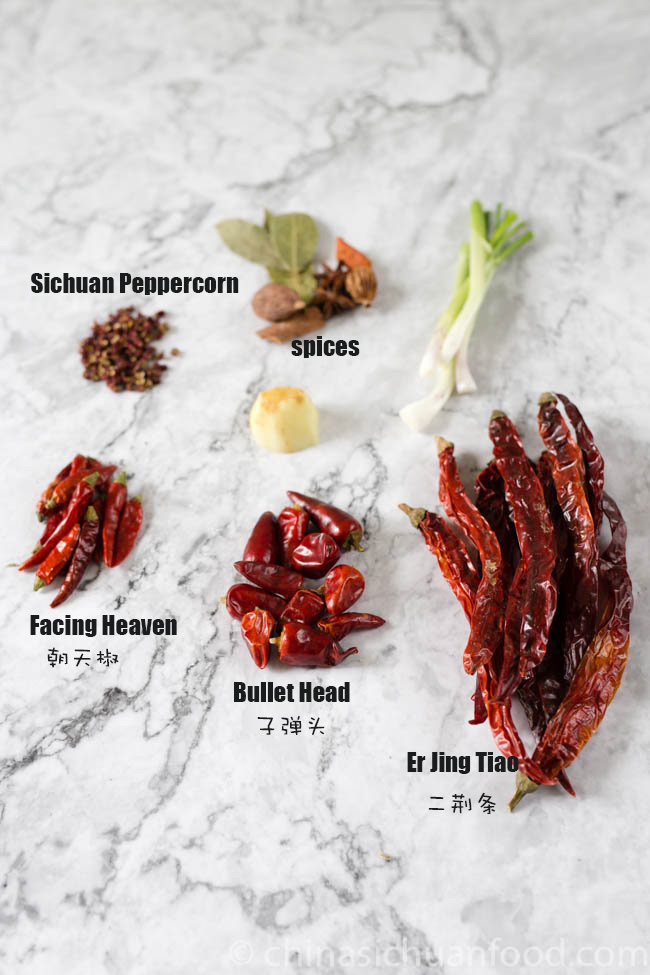
Sichuan lachang is defined above all by the presence of huajiao (花椒), the Sichuan peppercorn, whose numbing, citrus-tinged, slightly resinous flavor runs through the cured meat like a thread. Where Cantonese sausage is predominantly sweet — built on soy sauce, rose wine, and sugar — Sichuan sausage is savory, spiced, and bold. The fat-to-lean ratio tends to be generous, because fat carries flavor and keeps the sausage moist through the curing process. The spice blend typically includes dried red chili, Sichuan peppercorn, salt, high-proof Sichuan grain liquor (baijiu), and soy sauce, plus any number of additions — five-spice powder, ginger, brown sugar — depending on the maker’s preferences and family tradition.
The result is a sausage that is simultaneously more complex and more assertive than its Cantonese counterpart. The numbing quality of the Sichuan peppercorn doesn’t disappear during curing — it mellows, integrates, and becomes something that you notice as a lingering warmth rather than an immediate tingle. The chili contributes color (the deep red that makes a good lachang look almost incandescent when sliced) and a background heat that plays against the richness of the fat. The baijiu — which can run to 50 or 60 percent alcohol — serves multiple functions: it helps preserve the meat, contributes a sharp, complex fermented grain note to the flavor, and, when added in the right quantity, gives the finished sausage a depth that no other ingredient provides. You don’t taste the liquor exactly. You taste what it does to everything else.
The Making: Winter’s Work
Traditional lachang making in Sichuan follows the lunar calendar with the precision of a ritual. The process typically begins in the eleventh or twelfth lunar month — what locals call the layue (腊月), the “preserved month,” a name that derives directly from the curing practices that have defined it for centuries. The timing is not arbitrary. Temperatures in the Sichuan Basin during this period drop reliably below 10°C, and the cold is essential: it slows bacterial growth during the initial curing phase and allows the meat to dry gradually rather than simply decompose.
The starting point is pork — almost always pork, specifically from pigs slaughtered in the weeks before the new year in the tradition of nian zhu (年猪), the New Year pig. Families who keep pigs in rural Sichuan typically slaughter one animal each winter, and a significant portion of it becomes lachang, larou (cured pork belly), and other preserved products designed to last through the leaner months of early spring. In urban Sichuan today, most people buy their pork from a butcher, specifying the ratio of fat to lean they prefer — typically three parts lean to one part fat for a standard lachang, or a more generous fat ratio for a richer, softer result.
The pork is cut into chunks, then ground or chopped to the desired texture. Many traditional makers prefer a hand-chop rather than machine grinding, arguing that the coarser, more irregular texture produced by chopping gives the finished sausage a better bite and more pronounced flavor variation from piece to piece. The seasoning is added to the meat — salt first, to begin drawing out moisture and begin preservation, followed by chili, peppercorn, baijiu, soy sauce, and whatever additional spices the maker favors — and worked in thoroughly. This mixture is then left to marinate in the cold for several hours, sometimes overnight, allowing the seasonings to penetrate.
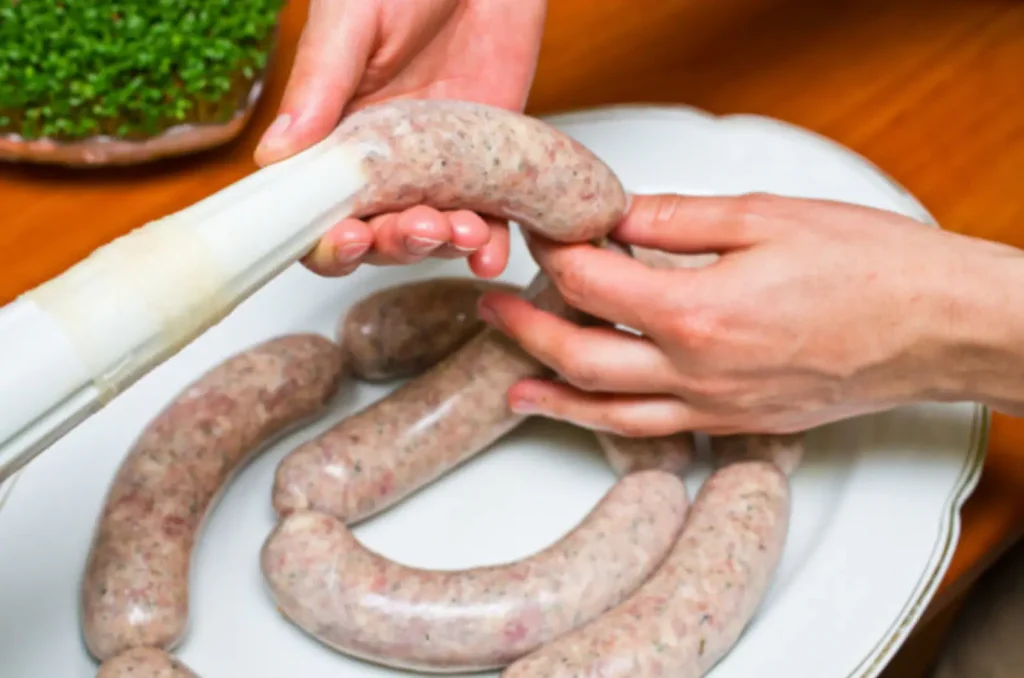
The casings are natural pork intestines, cleaned and prepared the day before use. Stuffing is traditionally done by hand, using a funnel or horn to pack the seasoned meat tightly into the casing, pinching and twisting at regular intervals to create links. Getting the stuffing right is the part of the process that requires the most skill: too loose, and the sausage will shrink unevenly as it dries and develop air pockets that compromise both texture and preservation; too tight, and the casing will split. A well-stuffed lachang should feel firm but slightly yielding when pressed, the meat packed evenly with no visible gaps.
Once stuffed and linked, the sausages are hung to dry. In rural areas, they are often hung over the kitchen hearth, where they benefit from smoke and the warmth of the cooking fire — a technique that adds a layer of smokiness and helps drive moisture out more quickly. In urban apartments, they are more commonly hung outdoors in the cold winter air, away from direct sun. Either way, they need at least two to three weeks to cure properly, and many makers prefer to leave them for a full month. You know a lachang is ready when the casing has tightened and wrinkled around the meat, the surface has dried to a firm, slightly glossy shell, and the fat has taken on a translucent, amber quality.
The Science of the Cure
What happens to a sausage over three or four weeks of hanging in cold air is not merely dehydration. It is a complex series of biochemical transformations that fundamentally alter the flavor, texture, and character of the meat.
Salt, applied in the initial seasoning, begins to draw water out of the meat cells through osmosis and creates an inhospitable environment for many harmful bacteria. More importantly, it activates enzymes naturally present in the meat — primarily proteases and lipases — that break down proteins and fats into smaller, more flavorful compounds. This enzymatic activity is responsible for much of what we perceive as the characteristic “cured meat” flavor: the depth, the umami, the slightly funky richness that distinguishes a good lachang from simply cooked seasoned pork.
The baijiu contributes to preservation through its high alcohol content, which inhibits bacterial growth on the surface of the meat and in the casing. But alcohol also acts as a solvent for fat-soluble flavor compounds in the spices — particularly the volatile aromatics in Sichuan peppercorn — helping them distribute more evenly through the meat during the curing period. This is why baijiu produces a more deeply integrated spice flavor than simply mixing dry spices into the meat: the alcohol carries the flavor into the fat in a way that water cannot.
The Sichuan peppercorn itself undergoes interesting changes during curing. The compound primarily responsible for its numbing effect — hydroxy-alpha-sanshool — is relatively stable but its perception changes in the context of cured fat. The intense, immediate tingle of fresh peppercorn becomes something more diffuse and persistent in lachang, a warmth that builds slowly on the palate rather than arriving all at once. Meanwhile, the terpene compounds responsible for the peppercorn’s citrus and pine notes become more concentrated as moisture leaves the sausage, which is why a slice of well-cured lachang often smells more intensely of Sichuan peppercorn than the raw seasoning mixture did.
How to Eat It
Lachang is most commonly cooked by steaming, which renders the fat gently without drying the sausage out, and slicing thin. A plate of steamed lachang — the slices translucent at the edges where the fat has clarified, the meat deeply red and shining — is a standard part of any Sichuan New Year spread, eaten at room temperature or slightly warm with rice and a scattering of fresh sliced chili or pickled vegetables to cut through the richness.
But lachang appears in a wider range of preparations than the simple steamed slice suggests. Fried rice with lachang — the sausage cut small and rendered in a hot wok until the edges crisp and caramelize, then tossed with egg and rice — is one of those dishes that seems too simple to be as good as it is. The fat renders into the rice, the spiced crust of the sausage pieces contributes texture and intensity, and the Sichuan peppercorn makes its presence known in a way that sets this apart from any other version of fried rice.
Lachang cooked with vegetables shows a different side of the ingredient. Stir-fried with garlic shoots (suantai, 蒜薹) — the flowering stems of garlic, slightly pungent and satisfyingly chewy — it becomes a dish of elegant simplicity: the richness of the cured pork balancing the sharpness of the garlic, the whole thing brought together by a brief blast of high heat. The same logic applies to lachang cooked with dried tofu (ganbantofu), with lotus root, or with any vegetable assertive enough to hold its own against the sausage’s intensity.
One of the most celebrated uses of lachang in Sichuan cooking is in shaomai (烧卖) — the steamed open-topped dumplings that appear on dim sum menus across China but take on a distinctly Sichuan character when made with lachang and sticky rice. The filling of glutinous rice, diced sausage, mushroom, and sometimes dried shrimp, wrapped in a thin wheat skin and steamed until the rice has absorbed the fat from the sausage — this is winter comfort food of a very high order.
Lachang also features heavily in the yanrou (腌肉) platter that begins formal Sichuan banquets and family New Year meals: an assortment of cured and preserved meats arranged on a plate, sliced thin, eaten cold or at room temperature as an appetizer. The platter might include larou (cured pork belly), smoked duck, bacon-style larou made from a different cut, and lachang, each contributing a different spice profile and texture to the array. This is a style of eating that rewards slowness — small bites, careful attention, the kind of consideration that comes naturally when you know each item on the plate took weeks to produce.
Regional Variations Within Sichuan
Sichuan is a large and topographically varied province, and lachang varies considerably across it. In Chengdu and the surrounding Chengdu Plain, the prevailing style tends to be relatively balanced — the chili and peppercorn present but not overpowering, the seasoning calibrated for versatility. This is the lachang that most people outside Sichuan encounter, and it represents a kind of mainstream ideal.
In the western and mountainous areas of the province — particularly around Ya’an, Kangding, and the areas bordering the Tibetan Plateau — lachang tends to be smokier, dried over hearth fires for longer, and often made with yak or beef rather than pork. The higher altitude and colder, drier winters of these areas produce a more intensely desiccated sausage, sometimes rock-hard and sliced paper-thin, with a concentrated flavor that can be overwhelming eaten in large quantities but extraordinary in small ones.
In the Zigong and Neijiang areas of southern Sichuan, the salt-industry heritage of the region — Zigong was historically one of China’s most important salt producers — is reflected in lachang that is more heavily salted and correspondingly more intensely cured. Zigong also has its own tradition of beef lachang, made with beef flavored with the characteristic spices of the local “salt-plate beef” (yanfen niurou) tradition.
In rural villages throughout the province, family recipes vary enough that two households on the same street might produce quite different sausages. The ratio of fat to lean, the quantity of peppercorn, the type of baijiu used, the length of curing time, the decision to smoke or not smoke — each variable leaves a mark on the final product. This variation is a feature, not a bug. It is what makes lachang a living culinary tradition rather than a standardized product.
The New Year and the Sausage
To discuss lachang purely in culinary terms is to miss something important. The making of lachang in Sichuan is bound up with the rhythms of the lunar year in a way that goes beyond convenience. The layue — the twelfth lunar month — is a period of preparation and anticipation before the new year, and the production of preserved meats is one of its central activities. Families that make their own lachang tend to do it as a collective activity: grandparents, parents, and children working together to chop, season, stuff, and hang. The labor is part of the point.
When the sausages are finally ready — hanging in the winter air, cured to a deep, intense red — they represent a small act of provision: food made with care against the coming year. Eating them at the New Year table is inseparable from the knowledge of how they came to be there. The grandmother who mixed the seasoning by feel, the grandfather who prefers less sugar and more peppercorn, the particular brand of baijiu that has been used in this family for as long as anyone can remember — all of this is in the sausage.
This is why lachang that you buy pre-made in a supermarket, however competently produced, never quite tastes the same as one made at home. It’s not only a question of ingredients or technique, though both matter. It’s that a homemade lachang is a document of a specific household, a specific winter, a specific set of hands. The flavor carries information that no commercial process can replicate.
Lachang Beyond the Province
Sichuan lachang has followed Sichuan people wherever they have gone — to other Chinese cities, to overseas Chinese communities, to anywhere that a Sichuanese grandmother found herself wanting to taste something that reminded her of winter at home. The necessary ingredients are not hard to find: pork is pork, and Sichuan peppercorns have become available globally as the cuisine has risen in profile. Several Chinese food importers now sell commercially produced Sichuan lachang in vacuum packaging. It is good enough — an honest version of the thing, consistent and correctly flavored.
But the real version, the one that takes a month to make and hangs above a window in December air, remains a winter ritual practiced in Sichuan homes and by Sichuan families scattered across the world. Wherever it is made, the smell that drifts from the hanging sausages is the same: meat and spice and time, the particular fragrance of something being transformed by patience. Wherever it is eaten — sliced thin on a New Year plate, fried into rice, or simply torn off in a piece and eaten standing in the kitchen — it tastes like a specific place, a specific season, a specific idea of home.
That is what a good sausage does. It stores something that cannot be preserved any other way.